Sociosemiotic identity of the animated icon: becoming an immortal cultural currency
- Briony Davies
- Oct 30, 2025
- 5 min read
Updated: Jan 9
Animated figures like Mickey Mouse and Paddington Bear transcend beyond their narrative connection and origin to achieve immortal cultural identity. These icons are designed for longevity using a strategic, visually simple depiction - an intentional under-design that creates an "empty vessel" for audience recognition. Yılmaz et al. (2018) argues that successful transmedia, referring to multiple platforms, must allow the consumer to "find traces from themselves" (YIlmaz et al., 2018, p. 48) in the story, and in this case the character, to ensure full consumption. The gaze can stem from the audiences’ emotional perception that fills in the “empty vessel”, and the simple and never changing appearance allows for inclusion and comfortability across media, but more importantly, self-identity. This essay will argue how the deliberate depiction of visual invariance in Mickey Mouse, with commentary of Paddington Bear’s moral invariance, creates a predictable and consolable gaze which can solidify a permanent cultural currency across transmedia forming a sociosemiotic identity.
Mickey Mouse’s journey begins as a personal caricature of Walt Disney, culminating in a universal cultural identity and commodity driven by a worldwide consumer gaze. The popularity of Mickey Mouse became a powerhouse for effective brand licensing and maintenance across every platform, as Disney not only reaches their young audiences, but connects to their adult viewers with the power of nostalgia (Santo, 2015). It can be seen that this strategic control came from losing the copyrights to Oswald the Lucky Rabbit. Following the loss of his first successful character to Charles Mintz and Universal (Peri, 2011, p. 72), Disney was forced to leave with no control over this character. This loss catalysed a shift in strategy as Disney sought to develop a character whose sociosemiotic power was so deeply integrated into its visual and legal identity that it would remain permanently beyond the reach of other distributors and competitors. It can be seen that one of the fundamental strategic mechanism behind this success is visual invariance from the fixed, simple aesthetic of the icon's depiction. This design has therefore created a longevity of identity as it transcends from the hands of the creator and into one that "creates themselves and the world through their own imaginations" (Yılmaz et al., 2018, p. 200). The icon, therefore, becomes independent of its origin and creator and transcends into a permanent cultural symbol by extending into a deeply integrated sociosemiotic identity. It is self-sustaining through merchandising, fan-art, and the public consciousness. The character’s simple fixed image is so powerful that he can be seen as an example of “hybridity”, where the merging of two or more cultural groups blend into artefacts or commodities. The 'Mickey Mouse kachina dolls’ were interpretations formed from the legends of “Tusan Homichi” as shown in image 1, a mouse who protected the Hopi people, which then became fused with “an icon of modern corporate entertainment” (Liebmann, 2017), showcasing two different cultures unintentionally blending and becoming a representation of both. This provides sufficient evidence that he is truly a worldwide, self-sustaining cultural force, but also cultural commentary on representation and how its perceived through the self. This process connects all audiences through a shared cultural currency, yet simultaneously allows the character’s simple depiction to remain intensely personal to the individual viewer.

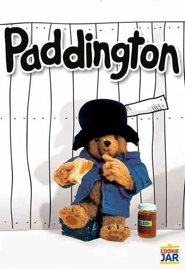
Exploring Mickey Mouses’ design showcases the icon’s cultural longevity which has led to minimal critical resistance across transmedia platforms. This is suggested by Paul Wells (2009) as he argues that intentional use of anthropomorphic figures creates a cultural container, allowing them to embody human values without specifics of race, gender, politics or religion. This simple visual identity creates a blank slate, essential for the viewer’s personal gaze and connection. The use of the anthropomorphic caricature goes beyond this “empty vessel” as it is enhanced by a deeper psychological mechanism as a tool, by purposely using juvenile or babylike features in an adult form. This deliberate tool evokes a universal, non-critical response. For example, Mickey’s three-circular design (image 2) and Paddington Bear’s realistic brown nose and deep, puppy-like eyes (image 3) creates a visual language that evokes sympathy, and surpasses the critical response in favour of emotional connection (Wells, 2009). This strategic visual language provides a comfort and safety net towards the character, and can be seen as a successful aid in the consuming gaze, where the audience is attracted to the products of characters like these. Furthermore, the simple design is easy to accept, allowing the corporate and cultural industry - Disney’s strategic licensing of extending into almost every category of marketing (Santo, 2015, p.8) - to influence the moral and emotional content the audience consumes. The icon becomes more then just entertainment, it becomes an ideology “sold in the form of videos, clothing and merchandising” (Geoff, 2007, p. 66). By utilising Mickey’s universal appeal to instil the American ideologies of individuality and freedom in all senses worldwide (Geoff, 2007, p. 66), it cements Mickey Mouse’s function as a permanent and influential cultural platform for commentary and self-identity.

Alternatively, while the consuming gaze is directed towards Mickey Mouse as a sense of cultural permanence, Paddington Bear evokes a more profound emotional connection that goes beyond the visual elements, and connects the audience to a moral identity. In contrast to Mickey Mouse representing born and bred American values, Paddington Bear is an immigrant who adopts the British values, abiding by being “liberal, tolerant and caring” (Grayson, 2012, p. 379), depicting his moral compass as unyielding. While his visual identity is significant to the viewer, his moral identity also enforces the viewer to find "traces from themselves" (Yılmaz et al., 2018) within the character, becoming one of the best British “souvenir(s) by travellers” (Grayson, 2012) fulfilling the transmedia requirement for self-reflection. This gaze seeks to preserve the icon's moral identity and solidify his power as a long-term cultural symbol.
Ultimately, the transmedia success and cultural longevity of animated icons like Mickey Mouse and Paddington Bear are not accidents of popularity but as a result of a deliberate, invariant visual strategy, with respects to their moral values. The simple, child-like depiction acts as an empty vessel, successfully directing the emotional gaze by capturing children’s aspirations and reflecting adults’ nostalgia for who they once were. Through this process of emotional connection, the icons go beyond their creators and origins, achieving the self-sustaining sociosemiotic identity that functions as an immortal cultural currency.
Word Count - 1,067
Bibliography -
The Walt Disney Company (2009) Mickey Mouse Club Circus at Disneyland. [Online Image] Available at: https://d23.com/mickey-mouse-club-circus-to-open-here/ [Accessed 16 Oct. 2025].
Grayson, K. (2012) ‘How to Read Paddington Bear: Liberalism and the Foreign Subject in A Bear Called Paddington’, The British Journal of Politics and International Relations, 15(3), pp.378–393. doi:https://doi.org/10.1111/j.1467-856x.2012.00506.x.
Liebmann, M. (2015) ‘The Mickey Mouse kachina and other “Double Objects”: Hybridity in the Material Culture of Colonial Encounters’, Journal of Social Archaeology, [online] 15(3), pp.319–341. doi:https://doi.org/10.1177/1469605315574792.
National Museum of American Art (2015). Mickey Mouse kachina dolls, Circa 1930–1955. [Online Image] Available at: https://journals.sagepub.com/doi/10.1177/1469605315574792 [Accessed 16 Oct. 2025].
Peri, D. (2011) Working with Disney: Interviews with Animators, Producers, and Artists. 1st edn. Jackson: University Press of Mississippi.
Santo, A. (2015) Selling the Silver Bullet: The Lone Ranger and Transmedia Brand Licensing. 1st edn. Austin: University of Texas Press.
Taggart, G. (2002) ‘Mickey Mouse Spirituality? Children's Worldviews and the Culture Industry’, British journal of religious education, 25(1), pp. 60–69
TvTropes (n.d.) Paddington (1975). [Online Image] Available at: https://tvtropes.org/pmwiki/pmwiki.php/WesternAnimation/Paddington1975 [Accessed 16 Oct. 2025].
Wells, P. (2009) The Animated Bestiary: Animals, Cartoons, and Culture. Rutgers University Press.
Yılmaz, R., Erdem, M.N. and Resuloğlu, F. (2018) Handbook of Research on Transmedia Storytelling and Narrative Strategies. 1st edn. Hershey: IGI Global Scientific Publishing.


Comments